Designing Climate-Resilient Cities with AI
Von Giulia Maria Marchetti
As European cities face increasingly frequent and intense heatwaves, architects and urban planners are looking for new ways to make urban environments more resilient. During a recent teaching mobility at the Université de Technologie de Compiègne (UTC) in France, Mustapha El Moussaoui, researcher at the Faculty of Design and Art of the Free University of Bozen-Bolzano, explored how artificial intelligence can become a valuable partner in this challenge.
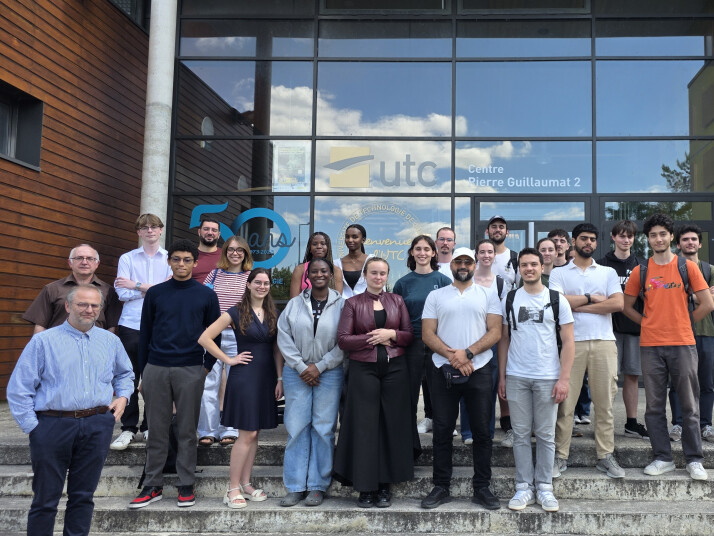
The intensive 20-hour course, carried out through the Erasmus+ Teaching programme and the SUNRISE Alliance, involved 26 students, mainly from Process Engineering, Urban Engineering and Computer Science programmes. Rather than using AI to generate ready-made solutions, the workshop focused on teaching students how to combine environmental analysis, human creativity and computational tools to develop evidence-based design strategies.
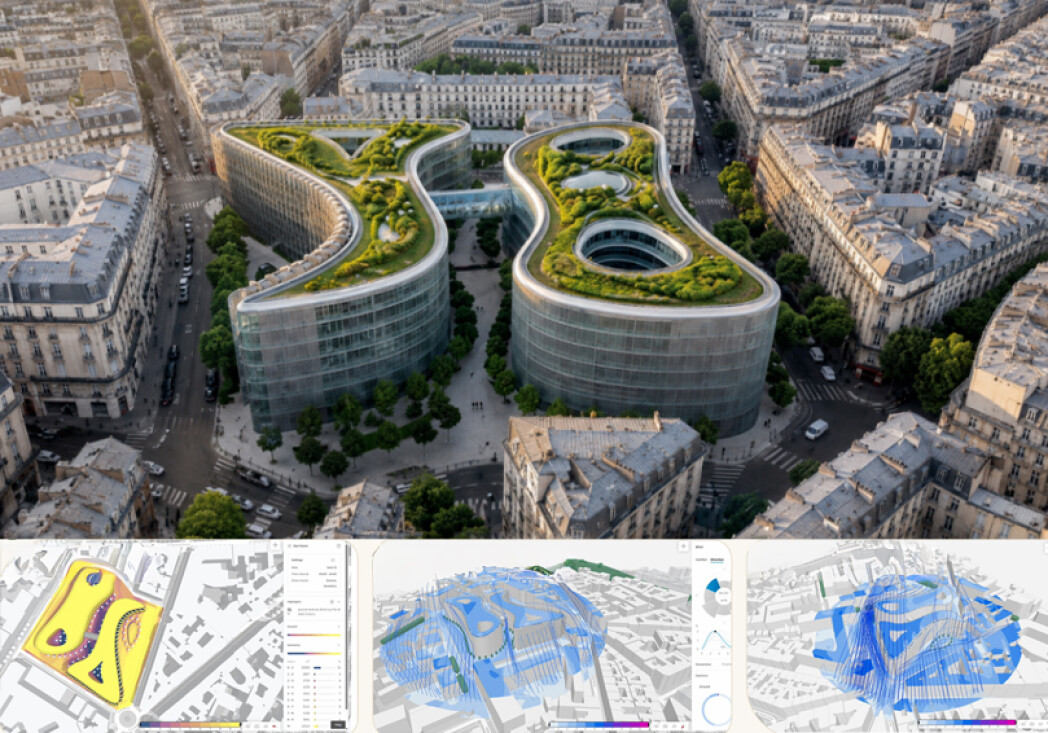
Working in groups, the students selected different districts of Paris, a city that has been significantly affected by recent heatwaves. Using an AI-powered platform, they analysed local environmental conditions, including wind patterns, solar exposure and microclimates. This data allowed them to better understand how the built environment influences urban temperatures and energy performance.
Based on these analyses, the students then developed multiple urban design proposals aimed at improving thermal comfort through passive strategies. Instead of relying solely on energy-intensive solutions such as air conditioning, they explored how urban form, vegetation and building layouts could work with natural elements. One example was redesigning neighbourhoods to channel cool summer breezes through public spaces, helping dissipate accumulated heat.
Only after developing their own concepts did AI re-enter the process. The students used simulations to evaluate the environmental performance of each proposal, comparing different scenarios before refining and visualising the final design.
«The idea was not to let AI replace the designer», El Moussaoui explains, «Instead, it became part of a human-AI collaboration, helping students test their ideas and identify the solutions that best respond to environmental conditions».
Beyond the classroom, the mobility also strengthened academic connections between partner universities. For El Moussaoui, participating in a teaching mobility within the framework of the SUNRISE Alliance offered clear added value.
«I have participated in Erasmus+ teaching mobilities for several years, but this was my first experience within the SUNRISE Alliance. The support and collaboration among the partner institutions were remarkable, and the connections established during this week are already opening the door to future joint research projects», he says.
El Moussaoui’s experience is a great example of how, by bringing together researchers, students and institutions across Europe, initiatives such as Erasmus+ and the SUNRISE Alliance foster the exchange of knowledge, encourage innovative teaching approaches and create new opportunities for collaborative research on some of today's most pressing societal challenges.
Related people: Mustapha El Moussaoui