unibz Supports Makerspaces for Women in Ethiopia and Djibou
Von Redaktion
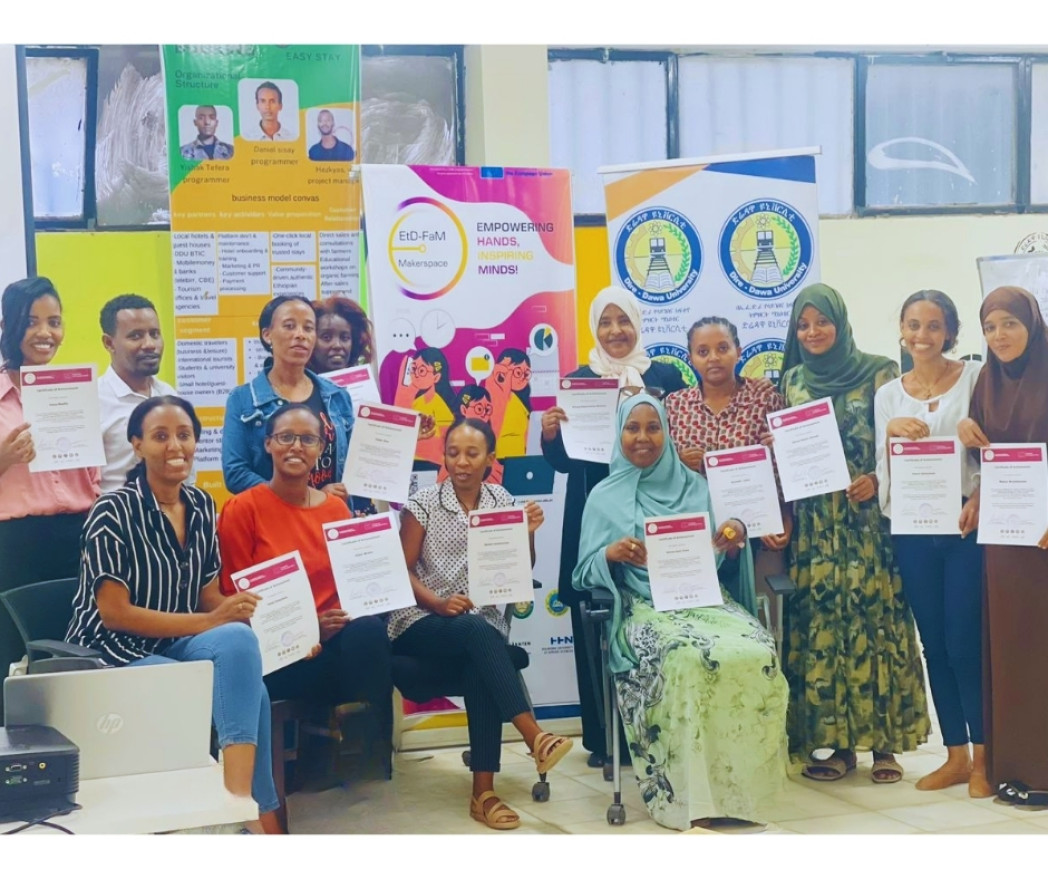
For many young women in Ethiopia and Djibouti, the gap between university and the world of work is not just wide, it can feel impossible to bridge. This is the challenge the Ethiopian-Djibouti Females at Makerspace (EtD-FaM) project was created to address. Its guiding motto says it plainly: "By establishing cutting-edge makerspaces in universities, a company-like environment, we are unlocking the potential of young female lecturers, researchers, students, and citizens to lead innovation and entrepreneurship across Ethiopia and Djibouti. These spaces provide the tools and collaborative environments needed to ignite creativity and drive real-world solutions in STEM."
The project is funded under the Erasmus+ CBHE programme (No. 101129162). Nine partner institutions from Ethiopia, Djibouti, Italy, Germany, and Austria share a common conviction: access to hands-on, innovation-oriented learning is not a privilege, it is a necessity, especially for women in STEM.
Six spaces, six communities
Between 2023 and 2026, six female-focused makerspaces were established across five Ethiopian universities and at the University of Djibouti, each tailored to its host institution's academic identity and local needs. Two examples show the range.
At Samara University, the Dry-Land Agriculture Makerspace was opened in December 2025 with a five-day textile production training. Most participants had never used a sewing machine before. By the final day, they had produced their first cloth bags and garments, a concrete proof of what hands-on learning can achieve.
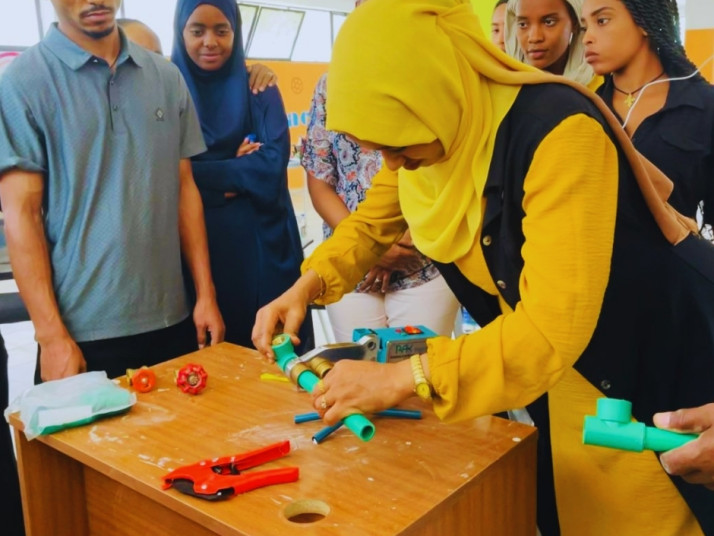
At Dire Dawa University, participants worked hands-on with water supply and sewage system installations; gaining practical engineering experience rarely accessible in traditional classroom settings.
Across all six pilots, conducted between December 2025 and January 2026, the same pattern emerged: when given a dedicated, hands-on learning environment, female students and researchers engage with remarkable energy.

Training the trainers first
Before any pilot could begin, unibz designed and delivered a Training of Trainers (ToT) programme. Prof. Erwin Rauch and researcher Marwa Ben Ali from the Faculty of Engineering's Sustainable Manufacturing Lab led the effort, supporting not only the physical setup of the spaces but also the preparation of the people who would run them. A total of 12 makerspace managers and assistants completed 16 hybrid sessions, combining online and in-person modules, gaining the technical, pedagogical, and managerial skills needed to operate these spaces independently. In the post-piloting assessment, all managers reported a strong to very strong impact on their readiness.
The makerspaces are not just rooms with equipment," explains Marwa Ben Ali: "They are ecosystems, and their success depends entirely on the people who manage them, the institutions that support them, and the communities that use them."
A foundation for the future
The piloting phase was a proof of concept, not an endpoint. What unibz and its partners have shown is that female-focused makerspaces work, across different institutions, disciplines, and contexts, when supported by trained staff, committed institutions, and real community engagement.
"We have validated the model," says Marwa Ben Ali. "Now the task is to embed it: to make these spaces a permanent part of university life, and ensure the women who use them carry those skills and that confidence forward."
Related people: Marwa Ben Ali Ep Belarbi, Erwin Rauch